
Emanuel Lasker
- December 25, 2025
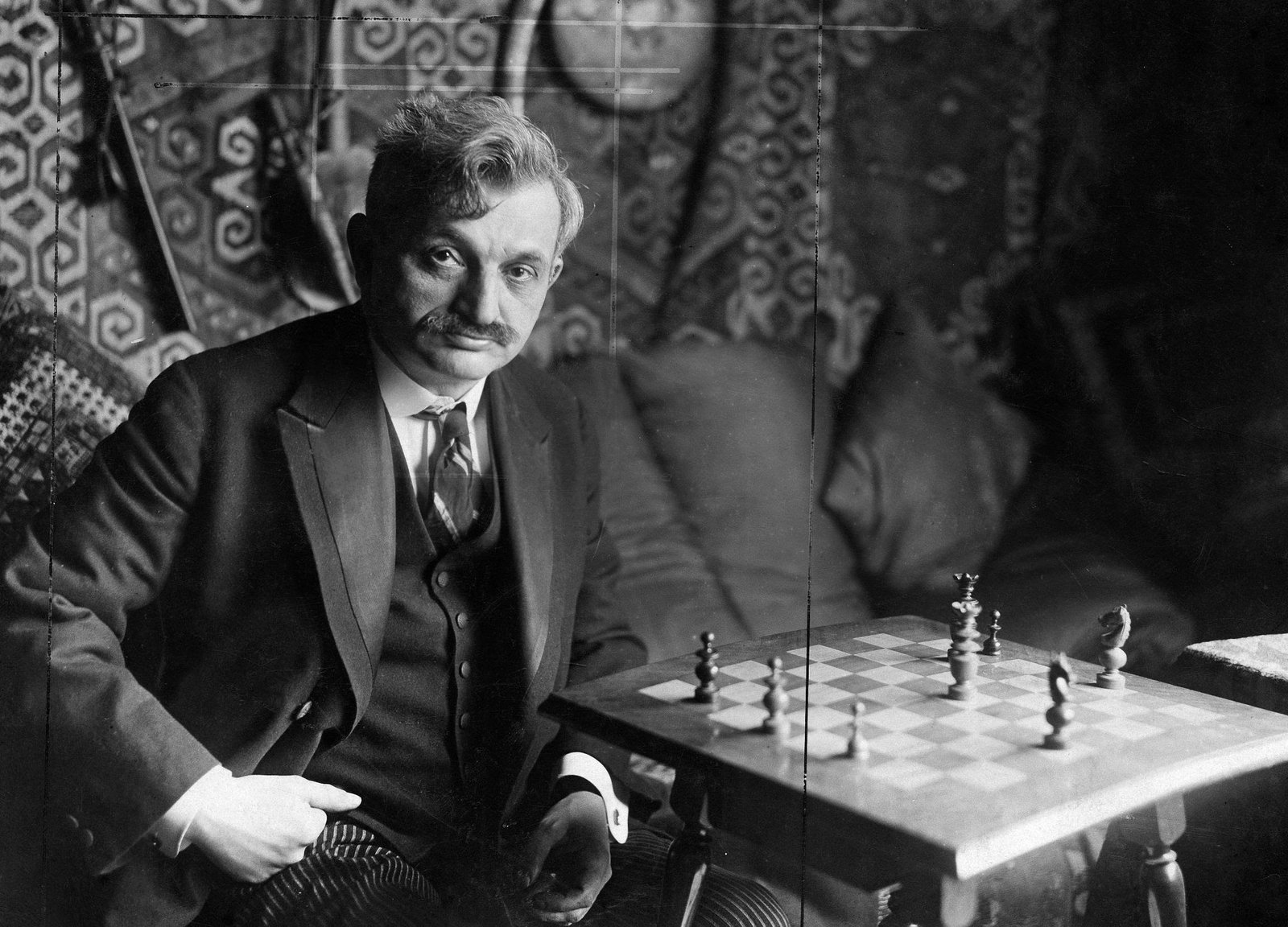
World Champion 1894 – 1921, winner of six title matches (1894, 1896, 1907, 1908, 1910, 1910)
Chessmetrics Ranking: World number one continuously from 1890 – 1902, 1908 – 1912, 1916 – 1919, and 1924 – 1926. A total of 292 months (24 years).
Tournament Career: winner of 12 super-tournaments:
St. Petersburg 1895/1896
Nuremberg 1896
London 1899
Paris 1900
St. Petersburg 1909
St. Petersburg 1914
Moravian Ostrava 1923
New York 1924
and a few others…
Undefeated in matches until 1921. Opponents: von Bardeleben, Mieses, Bird, English, Blackburne, Opponents defeated in title matches: Steinitz, Marshall, Tarrasch, Schlechter, Janowski.
What earned him this:
Emanuel Lasker was one of those world champions who unexpectedly won the title early in his career and from that moment on became the best in the world. The young German began to make a name for himself in the early 1890s, winning a few tournaments and matches, but few thought he could defeat Steinitz in 1894 in the fight for the world championship. However, the huge age difference between the opponents was a factor that many probably underestimated. Lasker became the second world champion and from that moment on, he started winning and never looked back. Initially, as a world champion, he was questioned and accused of winning only because of his opponent’s advanced age. However, his tournament results in the following years silenced all critics. At the biggest tournament of the century in Hastings 1895, he was only third behind Pillsbury and Chigorin (but ahead of all other great players of the time), but then began a series of tournaments where he won wherever he went.
He won in St. Petersburg ahead of Steinitz, Pillsbury, and Chigorin; in Nuremberg ahead of Maroczy, Pillsbury, Tarrasch, Steinitz, Janowski, Schlechter, Chigorin, and others; he won in London ahead of Janowski, Pillsbury, Maroczy, Schlechter, Chigorin, Steinitz, Blackburne, and others; and finally, he won in Paris ahead of Pillsbury, Marshall, Maroczy, Burn, Chigorin, Schlechter, Janowski, and others.
It was clear that chess had a new king, and this is confirmed by retrospectively calculated rankings that show his long-term position at the top of the world. In fact, he was the world number one longer than any other chess player since 1850. He was also the longest-reigning world champion – a full 27 years. The logical question would be why he is not ranked higher than seventh. There are several answers to this. His reign as world number one began at a time when there were still not many strong tournaments annually, making it easier to maintain this position than it is today. Mainly, however, his reign as world champion included long periods during which he did not defend his title.
After the rematch with Steinitz in 1896, he had the aforementioned dominant tournament results, but he did not defend the title in a match for a full 11 years! In 1907-1910, there were four defenses in quick succession: he clearly defeated Marshall, Janowski, and his greatest rival Tarrasch, and drew the match with Schlechter. After 1910 until 1921, however, he did not defend even once, although this was also due to the war, which prevented a match with Rubinstein, for example. If a world champion defends the title only six times in 27 years (on average once every four and a half years), it naturally detracts from his luster.
Before the war, he managed to win a strong tournament in St. Petersburg, during the war and shortly after, he was completely inactive and focused on his academic projects. After the war, he was no longer able to defend the title against the young Capablanca in the scorching Havana. However, even after losing the world champion title, he remained a very feared opponent and won tournaments in Ostrava and especially New York ahead of Capablanca and Alekhine.
In the mid-1920s, he retired from chess, but it was not to be a peaceful retirement. In the 1930s, after Hitler came to power, he had to leave Germany with his wife. They first settled in the Soviet Union and later in the USA. Between 1933-1936, Lasker briefly returned to chess tournaments as a sixty-year-old to earn money. His last tournament was the super-tournament in Nottingham 1936.
Best Games:
Harry Nelson Pillsbury vs Emanuel Lasker
St. Petersburg 1895
Support the author and help create more articles
Research and writing take hours. Your contribution keeps ChessDB.cz free of annoying ads and enables more frequent writing.
- 🎯 more quality articles
- ⚡ faster tool development
- 🖥️ server maintenance
Share
Miroslav Janeček graduated in English Philology at Palacký University Olomouc. Currently he works in Prague as a content editor for a large marketing company. His roots are in Opava - the historic and cultural centre of the Czech part of Silesia. That city is also the home of Slezan Opava, the chess club where Miroslav started to play chess, later went on to work as a youth coach and which he to this day proudly represents. As an aspiring chess publicist, he is the main author of articles on ChessDB.cz. In his free time, in addition to chess and writing, he also devotes himself to racket sports, history, and literature.