
Paul Morphy
- December 26, 2025
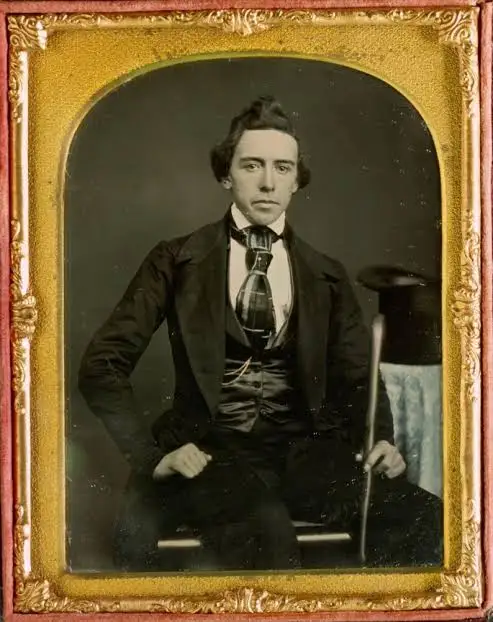
Unofficial World Champion approximately from 1858 – 1862
World Number One according to Chessmetrics from 1858-1861
Winner of the first American Chess Congress (1857)
Match results against European masters:
Morphy vs Anderssen 7:2 (=2)
Morphy vs Owen 4:1
Morphy vs Löwenthal 9:3 (=)
Morphy vs Bird 10:1 (=1)
Morphy vs Harrwitz 5:2 (=1)
Morphy vs de Riviere 6:1 (=1)
and other victories against lesser-known players…
Why he deserved it:
I have written about many players that they were among the best in the world. Morphy was not like that, he was simply the best. His chess career lasted only a few years, during which he became immortal. The brevity of his career did not allow me to rank him higher, but the extreme dominance he achieved over his opponents during that short time certainly did not allow me to rank him lower.
Morphy came from New Orleans and showed great talent for chess from an early age. As a young teenager, he was already one of the best players in this southern city. When he was twelve, the famous chess master Johann Löwenthal happened to be in town, who also appears in this series. He agreed to play a few games with the young talent and probably did not expect the strength of young Morphy. Their exact score is not precisely known, but Morphy defeated the great chess player more times than he lost. Löwenthal already knew then that the boy was exceptional.
Paul then focused mainly on his studies and had chess only as a side hobby. At the age of twenty, he graduated in law and was to become a lawyer. It was the year 1857. By chance, at that time, the first historical super-tournament on American soil – the First American Chess Congress – was held in New York. Chess was flourishing mainly in Europe, and the vast majority of elite players lived there. America was somewhat on the sidelines of the main chess stream. In 1851, the first international super-tournament in history was held in Europe, and a new era began – the era of international chess, where tournaments gradually began to replace matches. America did not want to lag too far behind, and this tournament in 1857 was the result – every chess master in the United States participated. It was played in a knockout system, following the model of the London tournament of 1851.
Morphy, who had just graduated, accepted the invitation to the tournament and, to everyone’s surprise, won it. He sailed through to the finals without any problems and without losing a single game, but in the finals, his defeat was generally expected. After all, Louis Paulsen, one of the world’s leading players, was waiting for him there! Morphy defeated him 5:1 (=2) and immediately became a celebrity in America. He was declared the best player in the United States.
Now it remained to measure forces with European masters, so he went to the old world. In Europe, the masters there did not admit that Morphy was a better player than they were – American chess players had never reached the level of Europe’s best players, although Morphy’s triumph over Paulsen certainly commanded respect. The young American traveled through France and England and played matches with the strongest players of the time. Anderssen, Löwenthal (yes – the old acquaintance who played with him as a twelve-year-old), Harrwitz, de Riviere, and several other masters – Morphy not only defeated them but defeated them by a wide margin. At the end of this triumphant campaign, there was no doubt about anything. The title of world champion did not exist at that time, but Morphy was unanimously declared the best player in the world.
He returned home as a celebrity, with banquets and celebrations organized in his honor. For Morphy, however, that was all in chess. He never participated in any more competitions. He did not consider chess something worth dedicating his entire life to. He opened his law office but was not successful. However, this was not a problem because he came from a wealthy family and had no shortage of money. He allegedly also participated in the Civil War. Not much is known about his fate after his chess career, and the information is incomplete. He was offered several times or even persuaded to return to chess, but he always refused. Towards the end of his life, he showed signs of mental illness. He died at the age of 47 in 1884.
Morphy played competitive chess for less than three years, during which he became probably the only chess player in history who defeated all his opponents and left completely unbeaten.
Best Game:
Paul Morphy vs Duke Karl II of Brunswick / Count Isouard de Vauvenargues
Paris 1858
1.e4 e5 2.Nf3 d6 3.d4 Bg4 4.dxe5 Bxf3 5.Qxf3 dxe5 6.Bc4 Nf6 7.Qb3 Qe7 8.Nc3 c6 9.Bg5 b5 10.Nxb5 cxb5 11.Bxb5+ Nbd7 12.O-O-O Rd8 13.Rxd7 Rxd7 14.Rd1 Qe6 15.Bxd7+ Nxd7 16.Qb8+ Nxb8 17.Rd8# 1-0
Support the author and help create more articles
Research and writing take hours. Your contribution keeps ChessDB.cz free of annoying ads and enables more frequent writing.
- 🎯 more quality articles
- ⚡ faster tool development
- 🖥️ server maintenance
Share

Miroslav Janeček graduated in English Philology at Palacký University Olomouc. Currently he works in Prague as a content editor for a large marketing company. His roots are in Opava - the historic and cultural centre of the Czech part of Silesia. That city is also the home of Slezan Opava, the chess club where Miroslav started to play chess, later went on to work as a youth coach and which he to this day proudly represents. As an aspiring chess publicist, he is the main author of articles on ChessDB.cz. In his free time, in addition to chess and writing, he also devotes himself to racket sports, history, and literature.