
Alexander Alekhine
- December 29, 2025
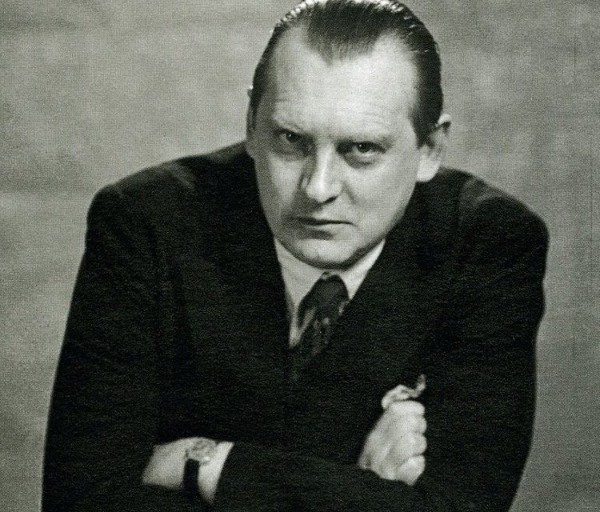
World Champion 1927 – 1935, 1937 – 1946, winner of four title matches (1927, 1929, 1934, 1937)
Chessmetrics Ranking: World Number One for a total of 122 months (10 years) between 1924 and 1944. Continuously from 1929 to 1935.
Tournament Career: winner of 30 super-tournaments:
2x winner of the Russian Championship
3x winner of the Hastings Chess Congress
2x winner of the Paris Chess Tournament, Prague International Chess T.
Winner of Mannheim 1914, Karlovy Vary 1923, Baden-Baden 1925, Zurich 1934, Salzburg 1942, and many others…
Chess Olympiads: two gold and two silver individual medals
What earned him this:
Alexander Alekhine became the fourth World Chess Champion in 1927 after a legendary match with Capablanca. This was surprising, as he was not the favorite going into the match. Capablanca was considered unbeatable, and the Russian émigré was not given much of a chance, despite having a series of good results behind him.
Alekhine was born into a wealthy Russian family, which was why he had to leave his homeland after the Bolshevik revolution and settled in France. He first drew significant attention at the super-tournament in St. Petersburg 1914, where he unexpectedly finished third behind Lasker and Capablanca. During World War I, he played other tournaments on Russian soil, and even after the war, he proved that he was among the rising stars. Alekhine left Russia in 1921 and moved to France, where he set himself a single goal: to become the player who would take the World Champion title from the newly crowned Capablanca. He dedicated the next six years to this endeavor.
As he gradually strengthened, his results improved. Among his memorable tournament victories in the 1920s were Karlovy Vary 1923 ahead of Bogoljubov, Maroczy, Reti, Rubinstein, and many others, or the Baden-Baden 1925 tournament ahead of Rubinstein, Saemisch, Bogoljubov, Tartakower, Marshall, Reti, Nimzowitsch, etc. In 1924, he first appeared at the top of the world according to historical rankings; he last appeared there twenty years later in 1944.
The only thing he struggled with was games against Capablanca. With the reigning World Champion, he had a record of 0:5 outside of draws when he finally managed to gather the money and organize a title match. This was why Alekhine was not given much of a chance.
Their match in Buenos Aires 1927 defined a chess era and was the longest title match until 1984. Alekhine won 6:3 (=25) and stood on the chess Olympus. From that moment, the situation in the chess world changed, the Cuban fell into a minor crisis, and the Russian became the hegemon. In the following eight years, Alekhine did not place lower than third in any tournament he attended. He won about two-thirds of them. This was reflected in historical rankings, which show his name at the top continuously from 1929-1935. His dominance in tournaments was incredible. For example, he won the San Remo 1930 tournament with a 3.5-point lead over the rest of the field, which included Nimzowitsch, Rubinstein, and Bogoljubov. A similar and perhaps even slightly stronger lineup was at the Bled 1931 tournament, where Alekhine finished first with a colossal 5.5-point lead over second-place Bogoljubov.
It was with Bogoljubov, who often finished second behind him in tournaments, that Alekhine played two World Championship matches (1929, 1934) and won both easily. As he continued to win, he began to rest on his laurels a bit, and his lifestyle deteriorated. He particularly began to indulge in alcohol. This was certainly one of the factors in his surprising loss to Max Euwe in a very close title match in 1935. But Alekhine was a champion, and he acted like one. He improved his lifestyle, organized a rematch, and two years later crushed Euwe. He became the first World Champion to regain a lost title. Ultimately, he became the only one to take it to the grave.
After regaining the title, his results were weaker than during his first reigning period, which had several causes. One was certainly age, as he was already 45 years old in 1937. But another cause was also the new generation of players, who slowly pushed his generation into the background with their new style and approach to the game. This was already evident in Nottingham 1936, where Botvinnik shared first place with Capablanca, and it was fully demonstrated at the AVRO 1938 tournament, where the eight best players in the world competed, and Keres finished first on tiebreaks ahead of Reuben Fine. In neither of these tournaments did Alekhine manage to make a significant impact.
The logical next step was a challenge for a World Championship match, which Alekhine received from Botvinnik and Keres, but negotiations were interrupted by World War II.
During the war, Alekhine collaborated with the Nazis, and it is still unclear to what extent out of pragmatism and to what extent out of sympathy. After the war, Alekhine was, in any case, a persona non grata. He resumed negotiations with Botvinnik, but unexpectedly died in the midst of preparations for the match.
Today, Alekhine is considered one of the greatest players in history and ranks among the World Champions who completely and utterly erased their competition during their era.
Best Games:
Efim Bogoljubov vs Alexander Alekhine
Hastings 1922
Support the author and help create more articles
Research and writing take hours. Your contribution keeps ChessDB.cz free of annoying ads and enables more frequent writing.
- 🎯 more quality articles
- ⚡ faster tool development
- 🖥️ server maintenance
Share
Miroslav Janeček graduated in English Philology at Palacký University Olomouc. Currently he works in Prague as a content editor for a large marketing company. His roots are in Opava - the historic and cultural centre of the Czech part of Silesia. That city is also the home of Slezan Opava, the chess club where Miroslav started to play chess, later went on to work as a youth coach and which he to this day proudly represents. As an aspiring chess publicist, he is the main author of articles on ChessDB.cz. In his free time, in addition to chess and writing, he also devotes himself to racket sports, history, and literature.