
Anatoly Karpov
- December 27, 2025
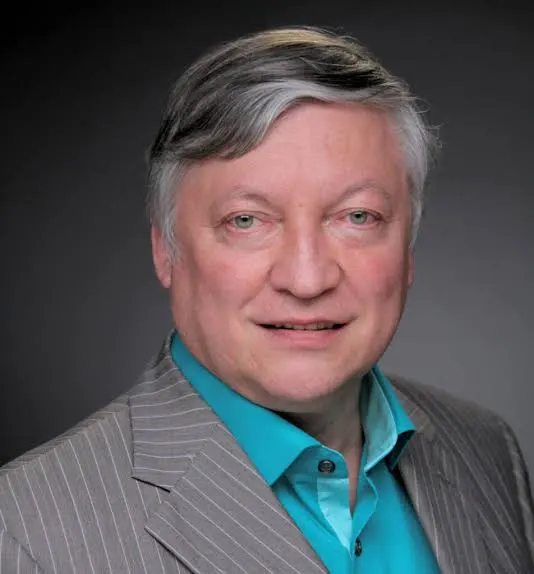
World Champion 1975 – 1985, winner of two title matches (1978, 1981) + default victory (1975) + interrupted match with Karpov leading Kasparov 5:3 (1985)
FIDE World Champion 1993 – 1999, winner of three title matches (1993, 1996, 1998)
Highest Elo: 2780
Ranking: World Number One 1976 – 1984 and then twice more for shorter periods, a total of 102 months
Tournament Career: Karpov won the most super-tournaments in history: 50
Candidate Matches 1974
7x winner of Tilburg Chess Tournament
3x winner of Biel Chess Festival, Bugojno Chess Tournament
3x winner of USSR Championship, 1x winner of Russian Championship
2x winner of Linares Chess Tournament, Tata Steel Masters, Amsterdam Chess Tournament
and many others…
Chess Olympiads: 6x team gold medal, two individual gold medals on first and second board
Why he deserved it:
Anatoly Karpov is a legendary chess player for several reasons. One of them is, of course, the fact that he was a world champion, but let’s add to that his role in two colossal chess rivalries or his unprecedented tournament successes.
Karpov was one of those world champions who appeared out of nowhere and became stars overnight. When the first FIDE Elo list was published in 1971, the twenty-year-old Karpov was ranked forty-third. A year later, he was eighth, and by 1973 he was second on the list behind world champion Fischer. Triumphs in super-tournaments like Hastings or the Interzonal Tournament in Leningrad, which qualified him for the Candidate Matches, helped him. It was clear that Karpov represented a new model of the Soviet super-grandmaster. He represented a new generation tasked with reclaiming the world champion title lost by the generation of Spassky, Korchnoi, Petrosian, Tal, and others. He was also completely loyal to the communist regime. All these factors made him a favorite of Brezhnev and the entire ruling establishment of the USSR, and his success was preferred and supported, while Viktor Korchnoi, for example, faced obstacles.
However, most people thought that Karpov would not win the Candidate Matches on his first try and that he would need some time to grow and refine his game before he could attack the chess crown. But that was not the case. Karpov gradually defeated Polugaevsky, Spassky, and in an extremely tough and nerve-wracking match, Korchnoi.
In 1975, a world championship match with Fischer was supposed to take place, but as is well known, the match never happened, and Karpov became the twelfth world champion without a fight. This, of course, meant that he had to prove he was a rightful champion. And here we probably come to the reason why Karpov won the most super-tournaments in history – a total of fifty. Many world champions limited their participation in tournaments after winning the title because they had achieved the greatest thing a person can achieve and had no reason to play tournaments: they might not have the motivation, and they could only lose, as they were expected to win every tournament, and in case of a loss, they might have to answer uncomfortable questions. In Karpov’s case, none of this applied. Because he became world champion without a fight, he had motivation, and unlike other world champions, he needed to prove that he wore the crown rightfully. And it must be said that he succeeded completely.
Due to Fischer’s inactivity, he became the world number one in 1976 and remained so continuously until 1984. During that time, he displayed one of the most dominant periods in tournament history. His largest lead over the second in the FIDE ranking was 64 points. During that time, he won super-tournaments in Linares, Tilburg, Las Palmas, Moscow, Bugojno, and Amsterdam in a dominant manner. Twice during that time, he defended his world champion title in matches against Viktor Korchnoi, first after a very dramatic course in 1978 and then by a clear margin in 1981. At that time, few would have expected that Korchnoi would not ultimately be Karpov’s main historical rival.
In the 1980s, Garry Kasparov emerged, and his rivalry with Karpov not only defined the 1980s but became the greatest chess rivalry of all time. Between 1984-1990, they played a total of five title matches, during which they played 144 games (21 wins for Kasparov, 19 wins for Karpov, 104 draws). From this colossal clash of two giants, the younger Kasparov ultimately emerged victorious. I will write more about these matches in the article about him.
In the 1990s, Karpov was already in his forties and gradually faded with flashes of brilliance. In the 1993 world championship cycle, he failed to advance through the Candidate Matches to another match, which was considered the end of an era. However, for Karpov, it was still not the end. He continued to achieve excellent results, and in 1994 he played the best tournament of his life in Linares. In the strongest tournament of the 1990s, he scored 11 points out of thirteen possible and left Kasparov and his main young competitors Anand, Ivanchuk, Kramnik, as well as Shirov, Kamsky, Gelfand, and other stars far behind. It was a reminder of what an aging legend could do.
He even became world champion again – when Kasparov fell out with FIDE and founded a rival association. Karpov then was the FIDE world champion from 1993 to 1999, defeating Timman, Kamsky, and Anand in title matches. When FIDE decided that the world champion would no longer have the advantage of being seeded directly into the final of the knockout tournament in subsequent cycles, Karpov refused to defend the title. Although he did not officially retire, he no longer participated in elite tournaments and matches after 2000.
In later years, he became a politician and deputy in Russia, and he also unsuccessfully ran for FIDE president. Today, he is the oldest living former world chess champion.
Best Games:
Anatoly Karpov vs Veselin Topalov
Linares 1994
Support the author and help create more articles
Research and writing take hours. Your contribution keeps ChessDB.cz free of annoying ads and enables more frequent writing.
- 🎯 more quality articles
- ⚡ faster tool development
- 🖥️ server maintenance
Share
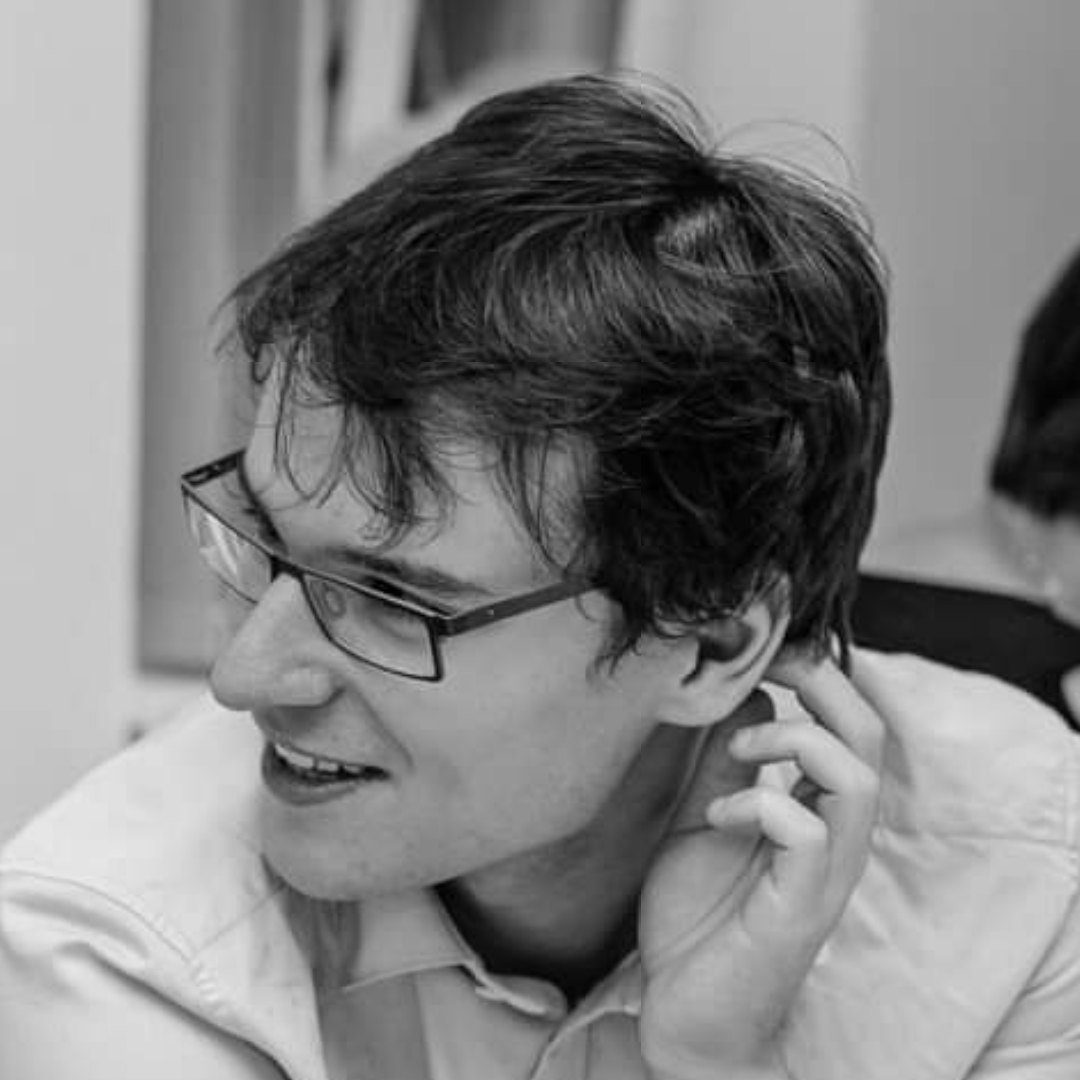
Miroslav Janeček graduated in English Philology at Palacký University Olomouc. Currently he works in Prague as a content editor for a large marketing company. His roots are in Opava - the historic and cultural centre of the Czech part of Silesia. That city is also the home of Slezan Opava, the chess club where Miroslav started to play chess, later went on to work as a youth coach and which he to this day proudly represents. As an aspiring chess publicist, he is the main author of articles on ChessDB.cz. In his free time, in addition to chess and writing, he also devotes himself to racket sports, history, and literature.