
Mikhail Tal
- December 17, 2025
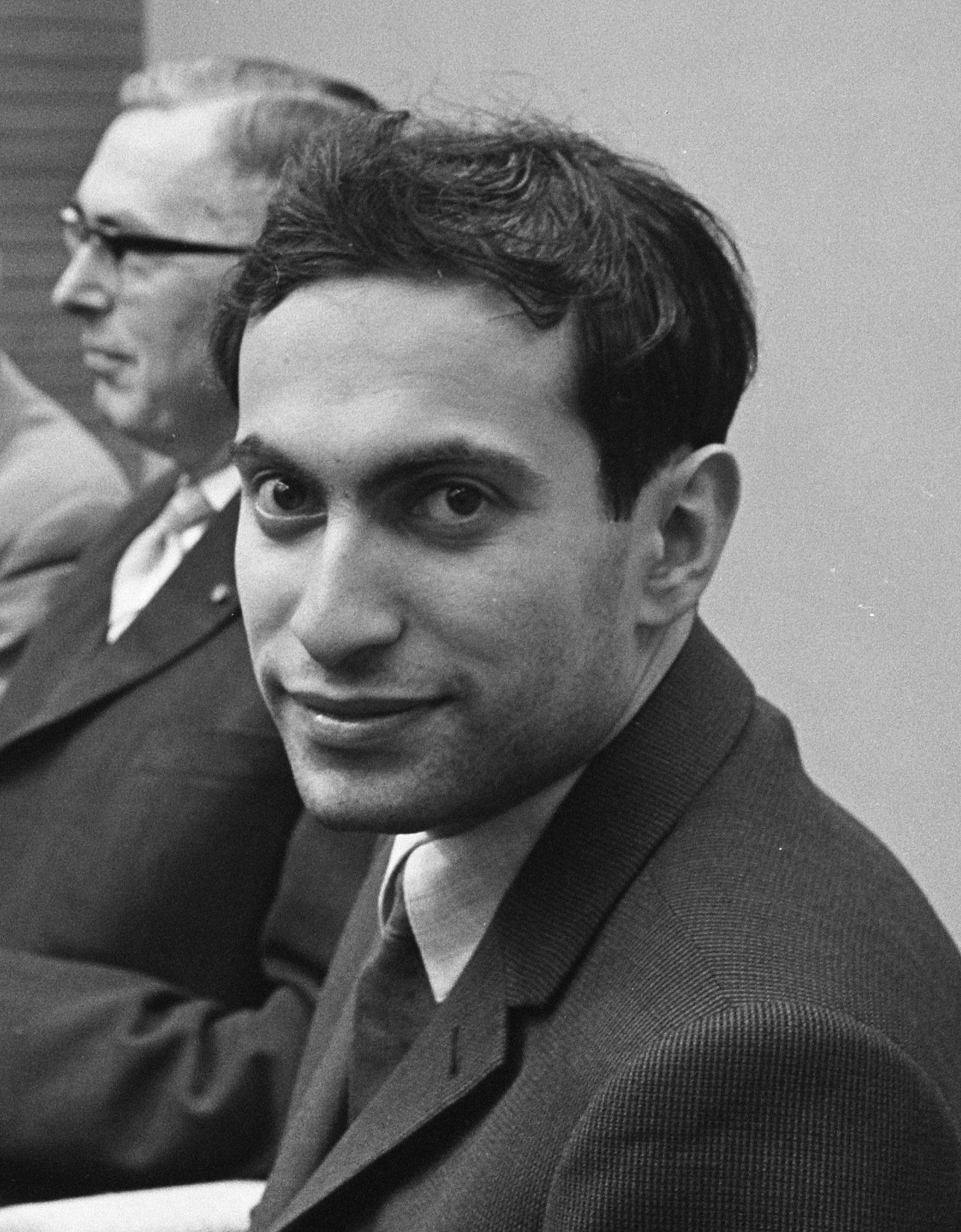
World Champion 1960 – 1961, winner of the 1960 title match
Ranking: According to Chessmetrics, world number one from 1958 – 1961 and briefly in 1965 and 1966, a total of 38 months. According to FIDE, he was ranked as high as world number two.
Highest FIDE Elo rating: 2705
Tournament career: Winner of 23 super-tournaments:
1960 Candidates Tournament
6-time winner of the USSR Championship
5-time winner of the Tallinn International Chess Tournament
3-time winner of the Chigorin Memorial in Sochi
Winner of Tata Steel Masters 1973 and several others…
Chess Olympiads: eight team gold medals, five individual gold and two silver medals.
Why he deserved it:
“The Magician from Riga” Mikhail Tal was possibly the greatest tactician top-level chess has ever seen. He was renowned for his complicated games, tactical intricacies, and semi-correct sacrifices. He stood out in the Soviet chess school, but eventually not just there but in chess in general. None of his games were the same as any previous ones. Other grandmasters were initially skeptical of his playing style, but eventually had to admit that Tal had a very special talent and tactical vision. His career became proof that even with a high-risk style, one can reach the absolute top in chess.
Tal’s rise to fame was meteoric. From a relatively unknown player at twenty-one, he won the first of his six USSR Championship titles. When he entered the tournament, he wasn’t even a grandmaster yet. The USSR Championship was one of the best-attended super-tournaments in the world at the time, and Tal dominated it ahead of other Soviet stars. It was clear that this young man had a bright future ahead of him.
A year later, he won the Interzonal – a qualifying tournament for the Candidates Tournament, and in 1959, in his first participation in the Candidates event, he emerged as the winner. He finished ahead of Keres, Petrosian, Smyslov, Gligoric, Fischer, Olafsson, and Benko.
The Latvian torpedo also won the 1960 title match against Botvinnik. Interestingly, Botvinnik was more than twice Tal’s age at the time of the match – Tal was 23 and Botvinnik 48 years old.
Mikhail thus climbed from a completely unknown player to world champion in just five years. At the turn of the 1950s and 1960s, he was also the world number one according to historical rankings, so he was truly the best in the world in every respect.
But for Tal, this state didn’t last long. Health issues, which he suffered from throughout his life, manifested too soon. He was prone to illnesses, and his unhealthy lifestyle didn’t help. When Botvinnik exercised his right to a rematch, as he had done with Smyslov, Tal was generally considered the clear favorite. Partly due to Botvinnik’s adjusted strategy and partly due to health problems (doctors reportedly advised him not to play the match at all), he couldn’t compete with Botvinnik and lost decisively. His short reign as chess king ended, as did the period when he was clearly the best player in the world.
He was still very young – he was only 25 when he lost the world champion title – and most of his career was still ahead of him. His success varied depending on his form and health. He had tournaments where he played like the best player in the world, but also those where he finished far behind.
After losing the title, he was a World Championship Candidate five more times, coming closest to another match in 1965, when he lost the Candidates final to Spassky. In 1970, he played on the ninth board for the USSR team in the match against the rest of the world. He drew his mini-match with Najdorf. He also played in the second USSR vs World match in 1984, where he won his mini-match on the seventh board.
Best games:
Mikhail Tal vs Sviridov
Stuttgart 1969, simul
Support the author and help create more articles
Research and writing take hours. Your contribution keeps ChessDB.cz free of annoying ads and enables more frequent writing.
- 🎯 more quality articles
- ⚡ faster tool development
- 🖥️ server maintenance
Share
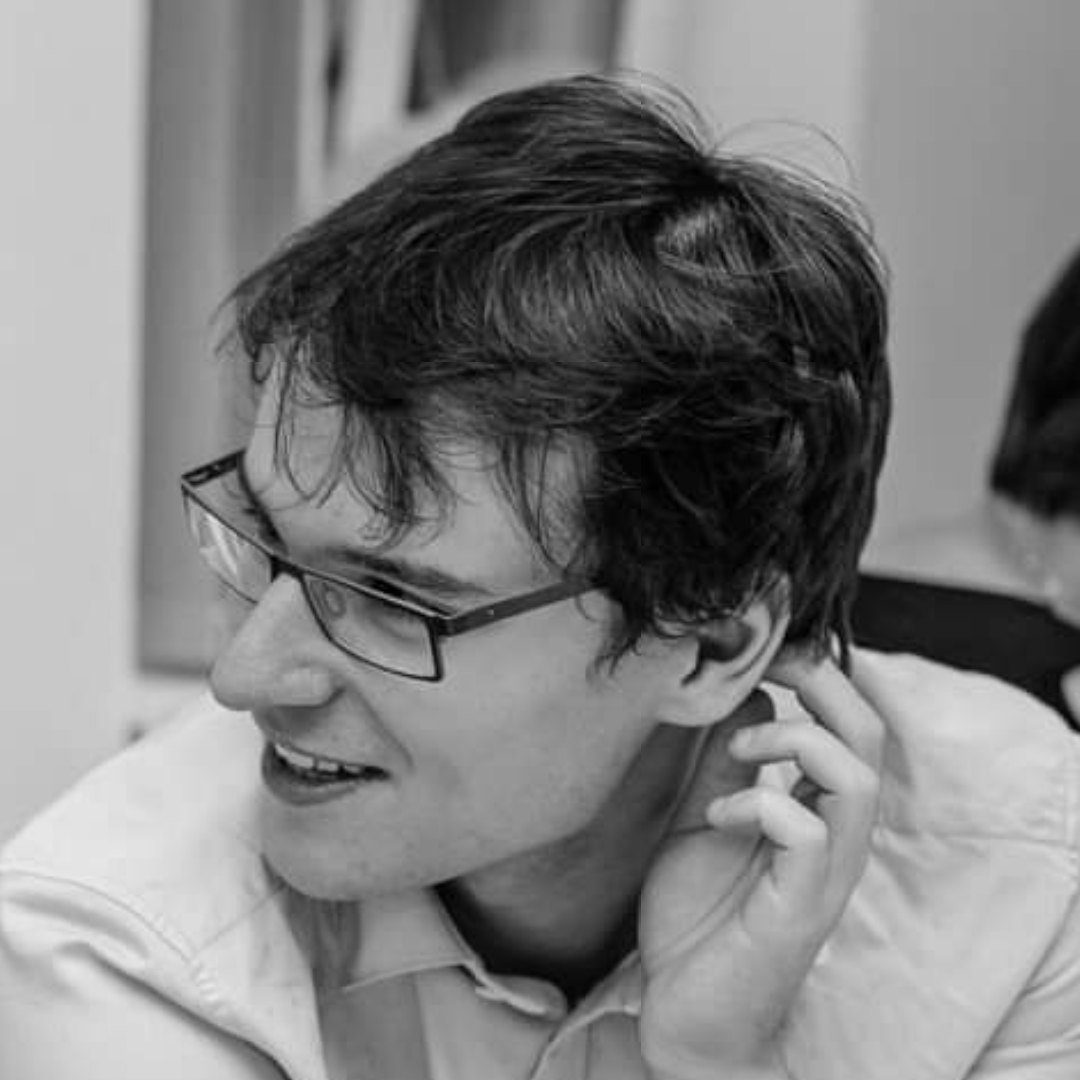
Miroslav Janeček graduated in English Philology at Palacký University Olomouc. Currently he works in Prague as a content editor for a large marketing company. His roots are in Opava - the historic and cultural centre of the Czech part of Silesia. That city is also the home of Slezan Opava, the chess club where Miroslav started to play chess, later went on to work as a youth coach and which he to this day proudly represents. As an aspiring chess publicist, he is the main author of articles on ChessDB.cz. In his free time, in addition to chess and writing, he also devotes himself to racket sports, history, and literature.