
Wilhelm Steinitz
- December 24, 2025
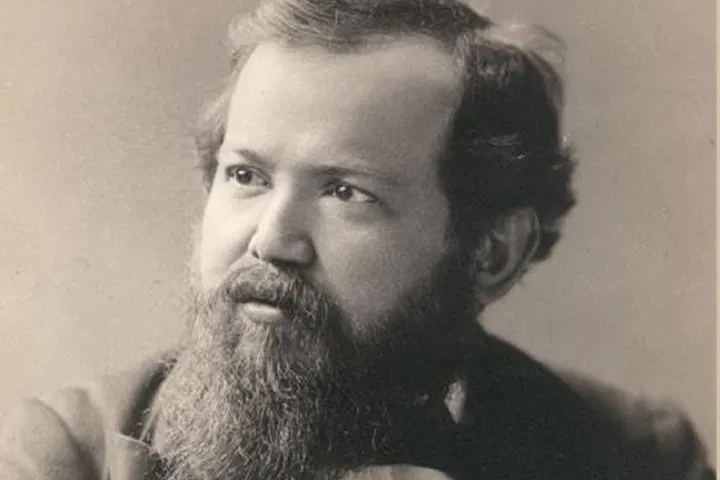
World Champion 1886 – 1894, winner of four title matches (1886, 1889, 1890, 1892)
Chessmetrics Ranking: World Number One for a total of 174 months (fourteen years) between 1866 and 1890.
Tournament Career: winner of five super-tournaments:
Vienna 1873, Vienna 1882
London 1872, New York 1894
Dublin 1865
Match Career before 1886: Steinitz vs Dubois 5:3 (=1)
Steinitz vs Anderssen 8:6
Steinitz vs Bird 7:5 (=5)
Steinitz vs Zukertort (1872): 7:1 (=4)
Steinitz vs Blackburne 7:0
Steinitz vs Mackenzie 3:1 (=2)
and many others. Between 1862 – 1894, undefeated in matches.
Why he deserved it:
Wilhelm Steinitz was born in Prague during the time of the Austrian Empire, lived most of his life in England, and eventually moved across the ocean to spend his final years in New York. Although he was a year older than the American Morphy and thus contemporaries, they never faced each other over the chessboard. Morphy was a chess meteor that faded before Steinitz could engage in international chess events. He succeeded around 1860, and his first significant tournament was London 1862, where he finished sixth.
His great strength at the beginning of his career was more in matches than tournaments. In the 1860s, he gradually defeated most of the elite players of the time in matches – Anderssen, Blackburne, Zukertort, Bird, and others. At that time, he played in the same style that was in vogue and made most of the masters famous – a romantic style full of sacrifices and combinations. The 1870s finally brought him tournament titles in addition to match successes, and Steinitz was generally considered the best chess player in the world. The most important was the super-tournament in Vienna in 1873, where Steinitz introduced the world to his new approach to chess based on positional principles. He stated, for example, that an unprepared attack succeeds only due to poor defense. His ideas were initially not understood by his colleagues, but the test of time proved their correctness. The Vienna tournament ended successfully – Steinitz and Blackburne tied for first place. A mini-match between these two players for first place followed, and Steinitz was stronger in it. Behind them were Anderssen, Paulsen, Rosenthal, and others.
After 1873, Steinitz almost took a decade-long break, earning a living by writing chess columns, giving simultaneous exhibitions, and blindfold chess exhibitions. Because he had previously earned a reputation as the best player in the world with his results, he was able to earn a decent living this way. Meanwhile, a new group of ambitious competitors emerged. Players like Anderssen or Paulsen were gone, replaced by Tarrach, Zukertort, or Chigorin. Their results and Steinitz’s inactivity gradually led the chess public to question the slowly aging chess player’s status as the best player in the world. So, at the beginning of the 1880s, Wilhelm returned to competitive chess and immediately won a major tournament in Vienna in 1882. His principles of positional play were more generally accepted by that time, and other players adopted and further developed them.
The biggest threat turned out to be Johannes Zukertort, who won a major tournament in London 1883 ahead of Steinitz, Blackburne, Chigorin, and others. Steinitz and Zukertort alternated in tournament triumphs at that time, and no one could say which of the men was truly the best in the world. And then both men began negotiating a chess match that would undoubtedly determine who was the best player in the world. This player would earn the title of World Chess Champion. Steinitz and Zukertort managed to agree on the terms, raise the money, and in 1886 – a full three years after that great London tournament – finally sat across from each other in a match that began a tradition lasting to this day.
The match was played from January to March 1886 in New York, St. Louis, and New Orleans. Zukertort had an excellent start, but Steinitz owned the finish and ultimately triumphed 10:5 (=5), becoming the first World Chess Champion. At fifty, he found himself at the peak of his career.
He successfully defended the title three times in matches – twice against Chigorin and once against Gunsberg. It wasn’t until 1894 that Emanuel Lasker, who was more than thirty years younger, proved too strong for him. This age difference remains the largest between two players fighting for the World Championship title in history. Losing the title seemed to briefly invigorate Steinitz. He began participating in tournaments again, won another tournament in New York, and finished in top places in others. In Hastings 1895, he played one of his best games, which won a beauty prize. A year later, he lost a rematch to Lasker, and then even his tournament results plummeted as his health deteriorated. He died in 1900 in New York.
Best Games:
Wilhelm Steinitz vs Curt von Bardeleben
Hastings 1895
Support the author and help create more articles
Research and writing take hours. Your contribution keeps ChessDB.cz free of annoying ads and enables more frequent writing.
- 🎯 more quality articles
- ⚡ faster tool development
- 🖥️ server maintenance
Share

Miroslav Janeček graduated in English Philology at Palacký University Olomouc. Currently he works in Prague as a content editor for a large marketing company. His roots are in Opava - the historic and cultural centre of the Czech part of Silesia. That city is also the home of Slezan Opava, the chess club where Miroslav started to play chess, later went on to work as a youth coach and which he to this day proudly represents. As an aspiring chess publicist, he is the main author of articles on ChessDB.cz. In his free time, in addition to chess and writing, he also devotes himself to racket sports, history, and literature.